
Summary
Walmart chose our survey tool to run the Associate Engagement Survey across every associate in the company. The launch had one hard gate: the survey-taking experience had to fully meet WCAG 2.1 AA. The tool had never been audited. I owned accessibility from audit through launch.
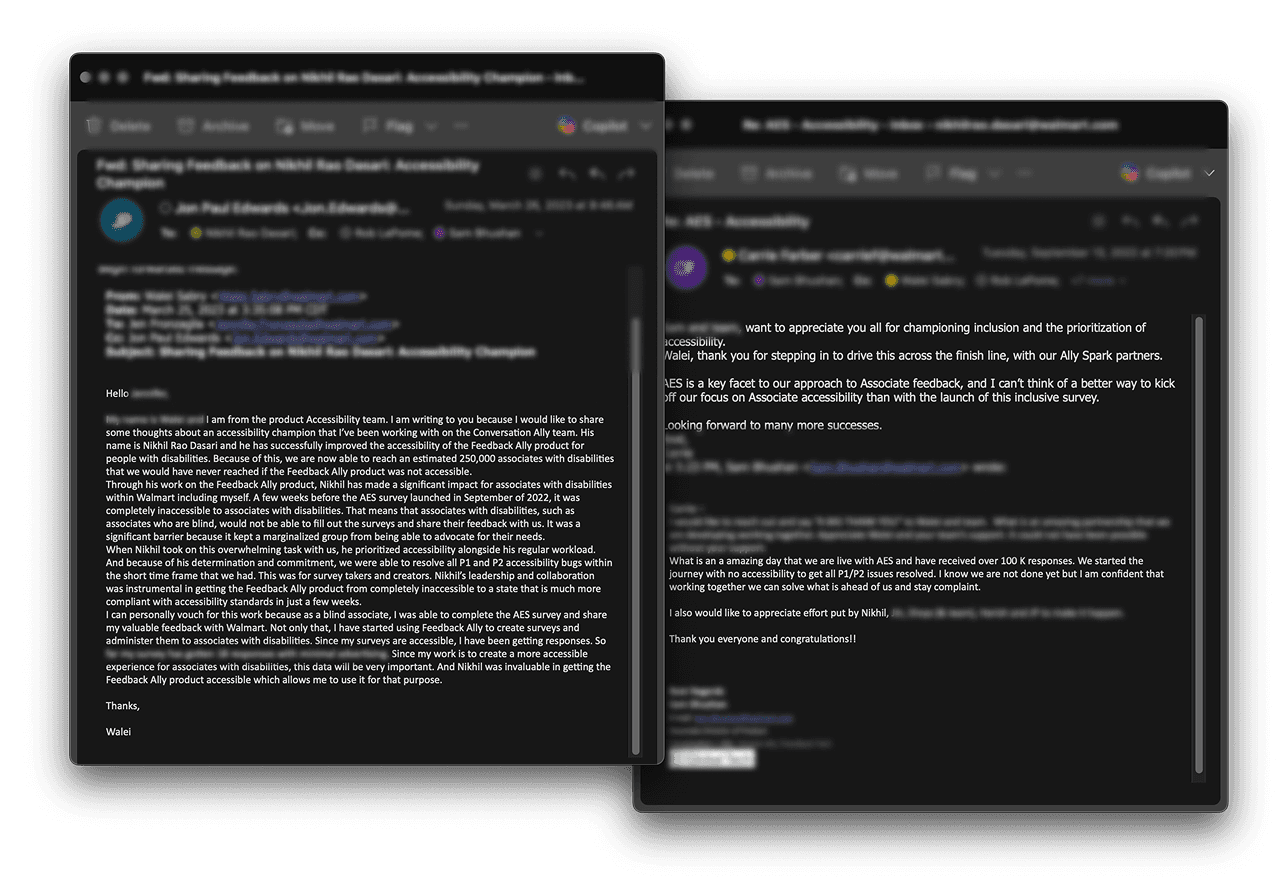
"I was able to complete the AES survey and create my own accessible surveys. Without Nikhil's work, this would have been impossible."
— Walei, PM, Accessibility Team
Problem
I was designing a survey tool for researchers across Walmart when it was selected for an enterprise-wide launch. The audience now included associates with visual and physical disabilities, and accessibility became a launch requirement. A survey intended to hear from everyone needed to work for everyone.

Prioritizing the launch
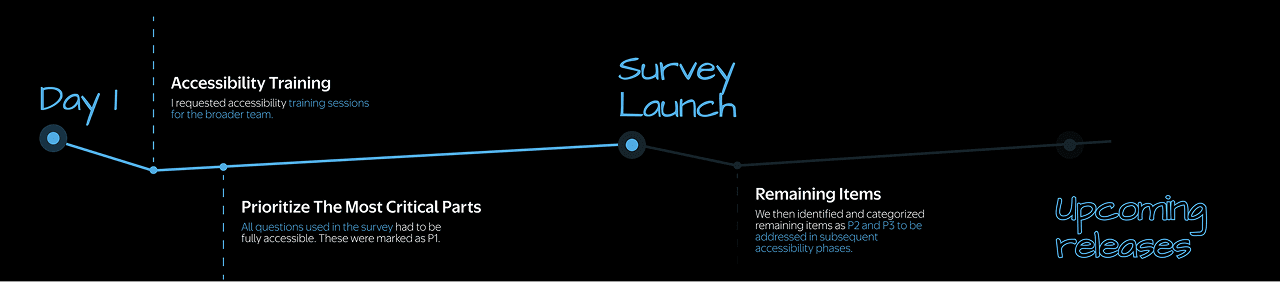
The product test was only a few months away. Making the entire survey platform accessible in that window was a significant challenge, so I first clarified which parts of the product the upcoming survey would use. That made the survey-taking experience the immediate priority.
Key decisions
Start with the path every associate would use. I prioritized the survey-taking flow for the upcoming launch, giving the team a defined scope to work through within the available time.
Make accessibility part of the handoff. I revisited the design files and documented screen-reader support, keyboard interactions and reading order so those behaviors were explicit alongside the visual design.
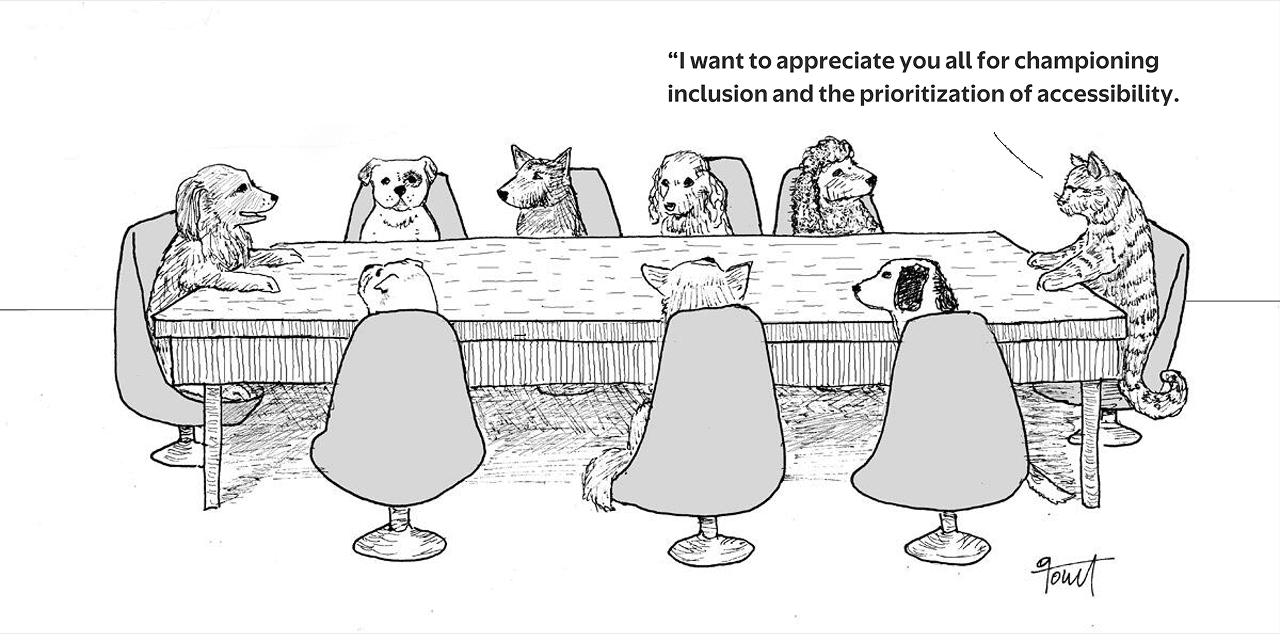
Bring specialists into the design process. I involved the Accessibility Workgroup early so we could work toward solutions that were both compliant and practical to implement.
Design changes
Documenting screen-reader and keyboard behavior
I added detailed annotations to the handoff files for elements that needed screen-reader support and keyboard interactions. The handoff now described how someone would use the interface as well as how it should look.

Making chart data accessible
Survey metrics were presented visually in charts. I supplemented those charts with accessible data tables so screen-reader users could interpret the same information.

Defining a logical reading order
I assigned a logical reading order across the pages. This gave the experience a deliberate sequence for people moving through it with assistive technology.

Working with the Accessibility Workgroup
I brought the Accessibility Workgroup into the design process early. We used that collaboration to work through accessibility requirements and arrive at practical solutions together.

Checking contrast beyond the design system
Walmart’s design guidelines already provided an accessible color palette. I still checked the components in context to make sure the actual combinations met the required contrast standards.

Results
As a team, we launched the survey with the accessibility requirements met. Nearly 2.2 million associates answered it, including more than 10,000 associates with disabilities. The work made participation possible at enterprise scale.
Survey responses
Nearly 2.2M
Associates with disabilities
10K+
Accessibility at launch
100%
Learnings
Accessibility needs to be part of the design process from the start. Revisiting the handoff files showed me how much interaction detail a visual design alone can leave unspecified.
Collaboration made the work achievable. Bringing the Accessibility Workgroup into the process helped us move from requirements to solutions the team could implement.
Prioritization matters at enterprise scale. Clarifying the upcoming survey’s scope let us focus on the experience associates needed for launch and approach the broader accessibility work in phases.